Bathroom
20 Minimal Scandinavian Bathroom Ideas That Feel Like a Spa

Jump to section
The spa experience is mostly a question of what’s been removed.
Think about what makes a hotel spa bathroom feel different from yours at home. It’s not the fixtures — most spa bathrooms have surprisingly ordinary plumbing. It’s the counters, which are clear. The towels, which are white and soft and folded. The products, which are contained and considered. The lighting, which is warm rather than bright and clinical.
All of these are decisions about what to take away, not what to add.
The Scandinavian bathroom understands this at a fundamental level. It’s not a maximalist room with luxury features. It’s a room where almost everything unnecessary has been removed, and what remains has been chosen carefully. The result is calm — and calm, in a bathroom, is what makes it feel like a spa.
Here’s how it’s done.
The counter is everything
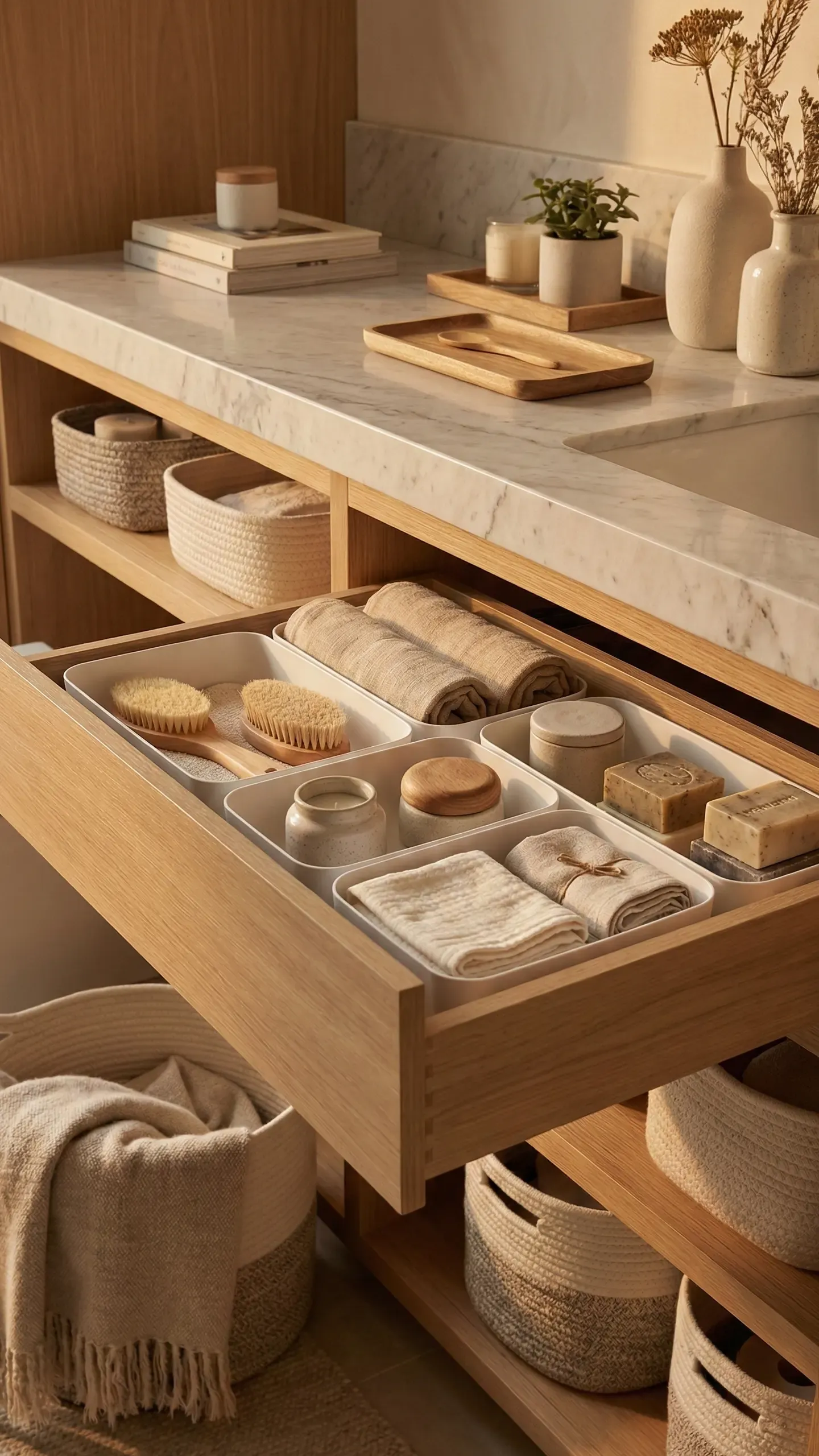
The bathroom counter tells the whole story of the room in a single glance.
In most bathrooms, the counter holds the toothbrush and toothpaste (in their original packaging), the hand soap (also in its original packaging), the moisturiser, the contact lens case, last night’s hair tie, someone’s watch, a half-empty glass of water, and something that’s been there so long no one remembers what it’s for.
In a Scandinavian bathroom, the counter holds: a ceramic soap dispenser, possibly a small plant or a single object worth looking at, and nothing else. Everything daily lives in the top drawer or in a basket in the cabinet, brought out in the morning and put away in the evening.
This is the change that costs the least and produces the most dramatic visual result. Not a renovation. Not new fixtures. Just everything off the counter, and a decision about what earns its way back.
The move: Right now, pick up everything on your bathroom counter and put it in a bag. Then put back only what you use every time you wash your hands. Everything else finds a cabinet home.
Decanting: the detail that changes the room
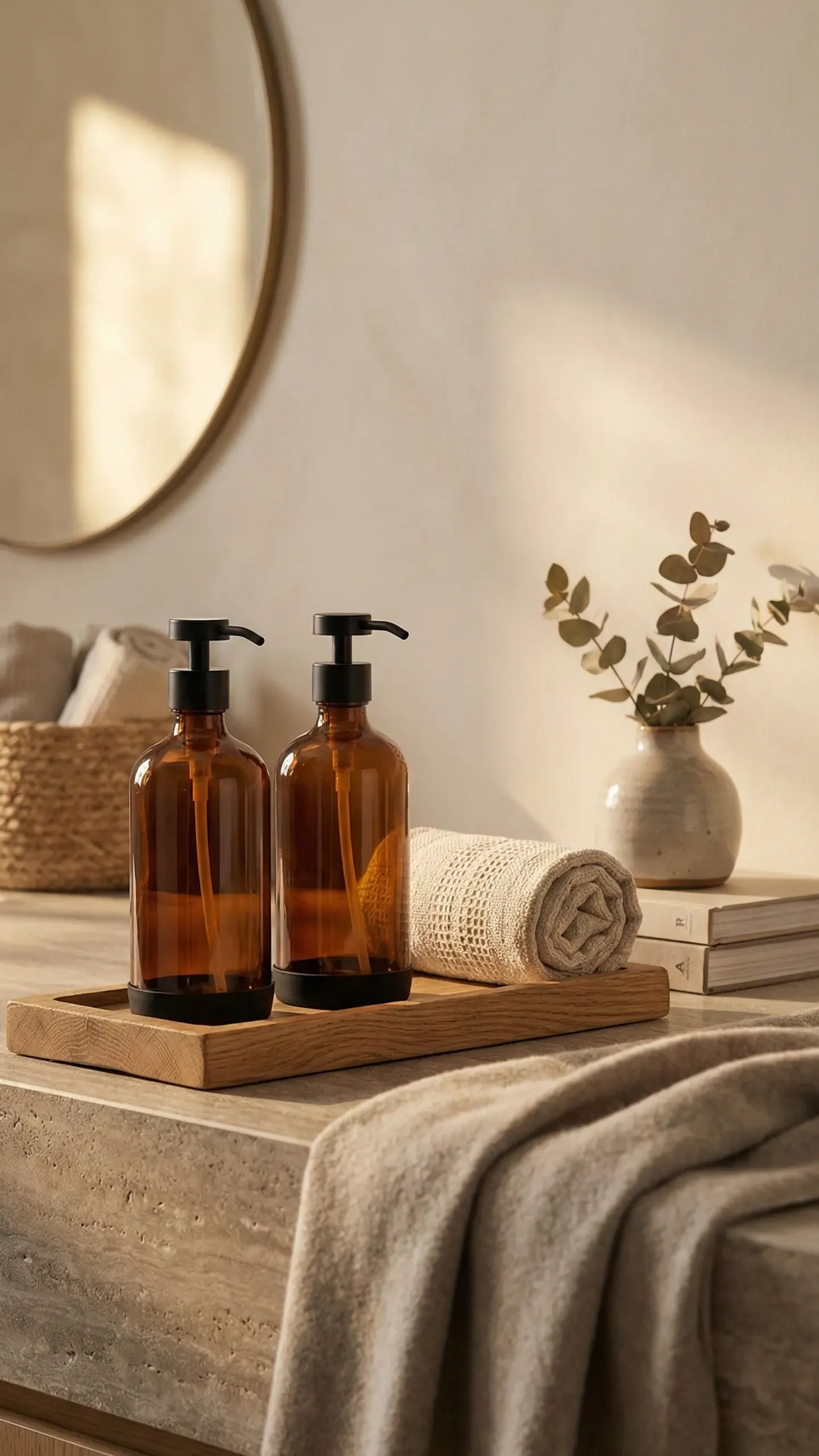
The reason the hotel spa bathroom looks calm while yours often doesn’t comes down, in significant part, to packaging.
Products designed to be sold in a store are designed to catch your eye. Bright colours, bold logos, busy typography. They’re doing their job perfectly — in a store. On a bathroom counter, they create visual noise that you stop consciously noticing but that your brain never stops registering.
Decanting is the simple solution. Hand soap in a ceramic dispenser instead of its plastic bottle. Cotton pads in a glass jar instead of a cardboard box. Spare cotton buds in a small lidded dish instead of a pharmacy bag.
The materials themselves matter: ceramic and glass are heavy, slow, calm. Plastic is light and disposable-feeling. The difference in how a counter reads when ceramic and glass replace plastic is immediate and significant.
The move: Buy two matching ceramic dispensers — one for soap, one for lotion — and a glass jar for cotton pads. It’s probably the cheapest visible transformation available to any bathroom.
Wood in a wet room
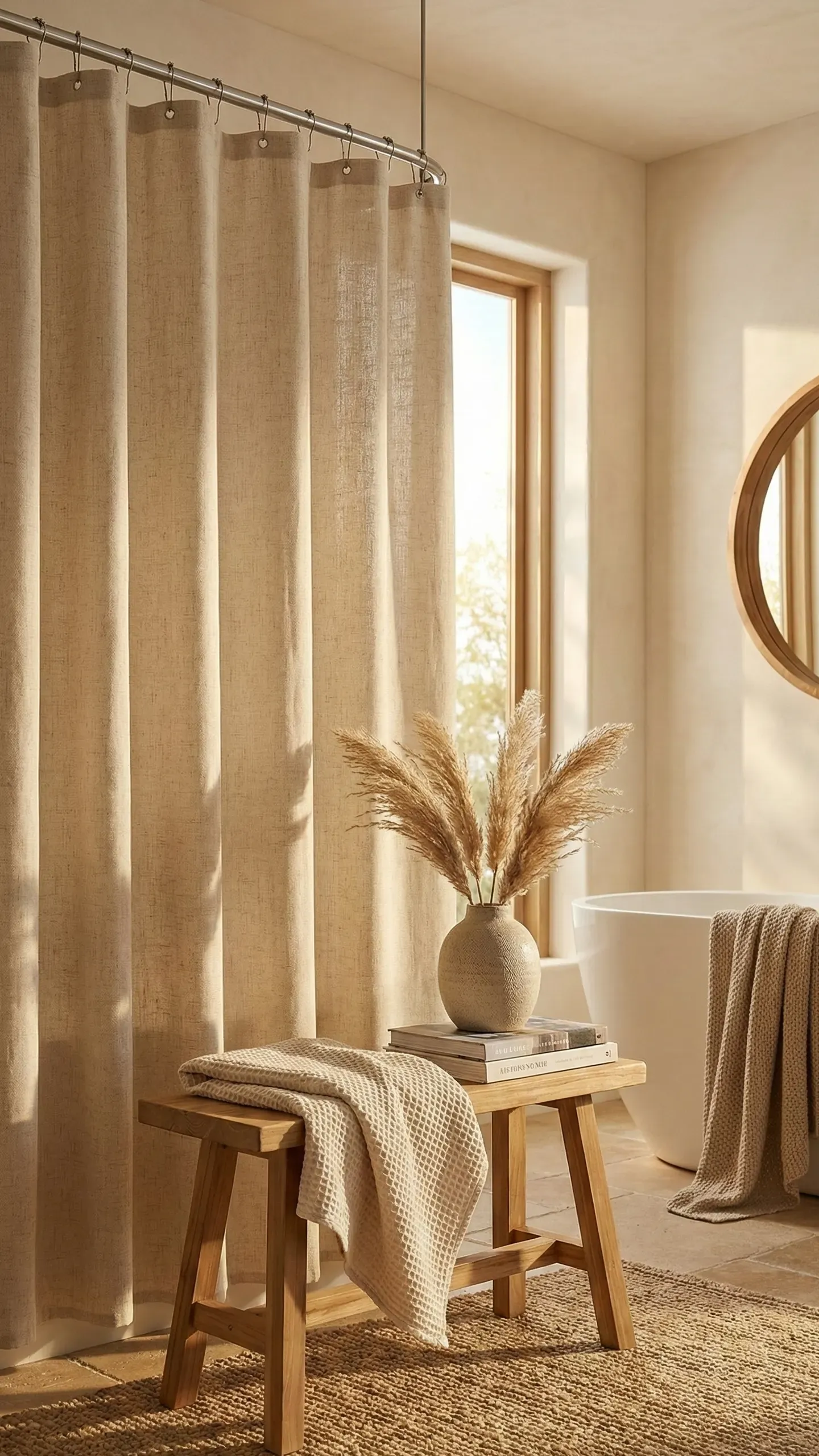
The question people most often ask about Scandinavian bathroom design is: why does wood work so well when bathrooms are wet rooms?
The answer is that certain woods — teak specifically — handle water beautifully. Teak contains natural oils that resist moisture, which is why it’s been used in boat building for centuries. A teak stool or bath mat in the bathroom will age gracefully with water exposure rather than degrading.
Beyond practicality, wood does something in a bathroom that no tile or painted surface can: it brings warmth. A room of white tile and chrome and porcelain has zero warmth. One teak stool, one wooden shelf, or even a wooden bath mat changes that immediately.
The teak stool in particular is one of the most useful objects in a bathroom. It functions as a towel perch. A plant stand. Extra surface when you need it. A place to sit while you wait for the bath to fill. It earns its space completely.
The move: Add a teak stool to your bathroom. Place it where you’d naturally want a surface. Let it do several jobs.
Eucalyptus in the shower
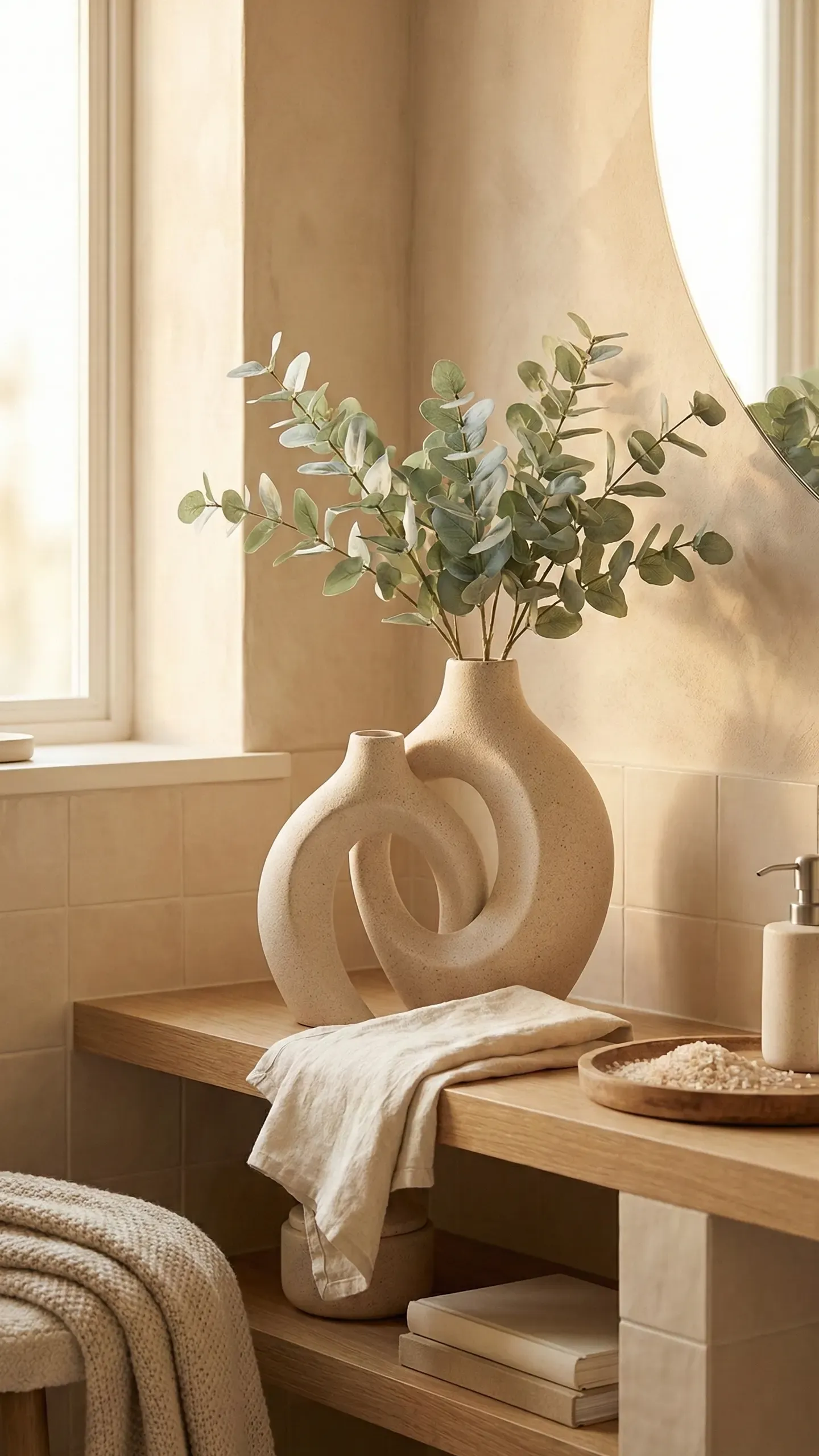
This is one of those ideas that sounds too simple to work as well as it does.
Bundle three to five stems of fresh eucalyptus and hang them from the shower head or from a hook in the shower enclosure. When you shower, the steam and heat release the essential oils in the leaves. The bathroom fills with a subtle, clean scent that’s genuinely different from anything a synthetic air freshener produces.
It’s aromatherapy without the overhead of aromatherapy. It costs almost nothing. It adds green to a room that tends toward grey and white. And it gives every shower a quality that’s difficult to describe without sounding slightly dramatic — a sense of occasion, of something that’s been thought about.
Replace the bundle every three to four weeks. Dried eucalyptus also works, and stays longer.
The move: Buy a bunch of eucalyptus this week and hang it in the shower. Try it for a month.
The free Scandinavian Styling Checklist — room by room, change by change.
Towels: the quiet luxury move
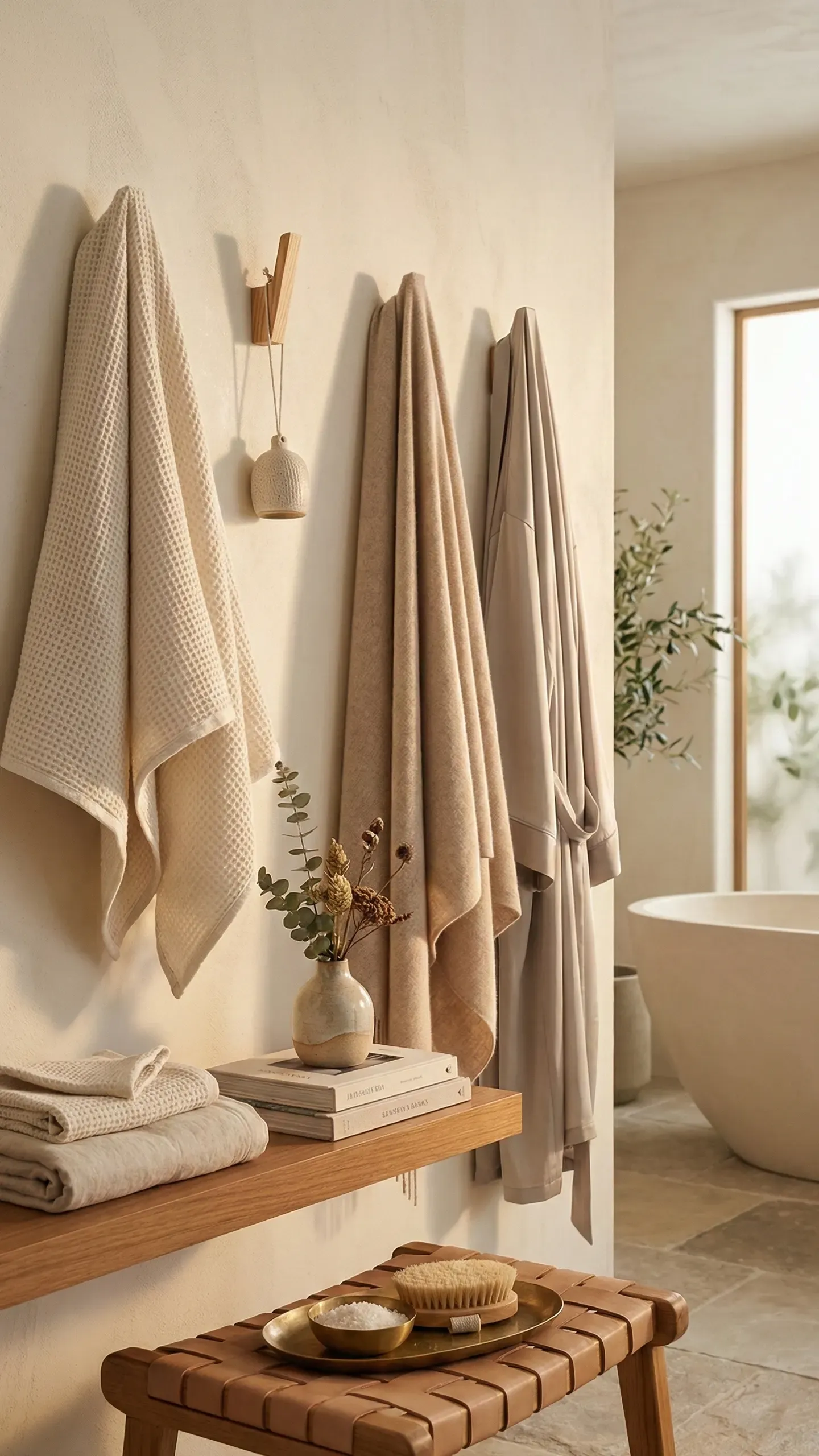
Most people don’t think much about their towels until they’re at a very good hotel and think: these are so much better than mine.
The difference is usually two things: material and quantity.
Waffle-weave linen towels are the Scandinavian standard because they dry faster than cotton terry, feel better against skin after a few washes, and have exactly the kind of relaxed texture this aesthetic depends on. They look good hung, folded, and rolled. They age well.
The quantity point is less obvious but equally important: too many towels in too many colours is visual chaos. A Scandinavian bathroom has towels in one or two tones — warm white, oat, or a simple stripe — and they’re consistent. The eye sees a palette, not a collection.
The move: Start with hand towels — they’re the most visible, the cheapest to replace, and the most frequently touched by guests. Buy three identical ones in linen or waffle weave in a warm neutral. Use them for a week and notice how differently the room feels.
Soft light, not bright light
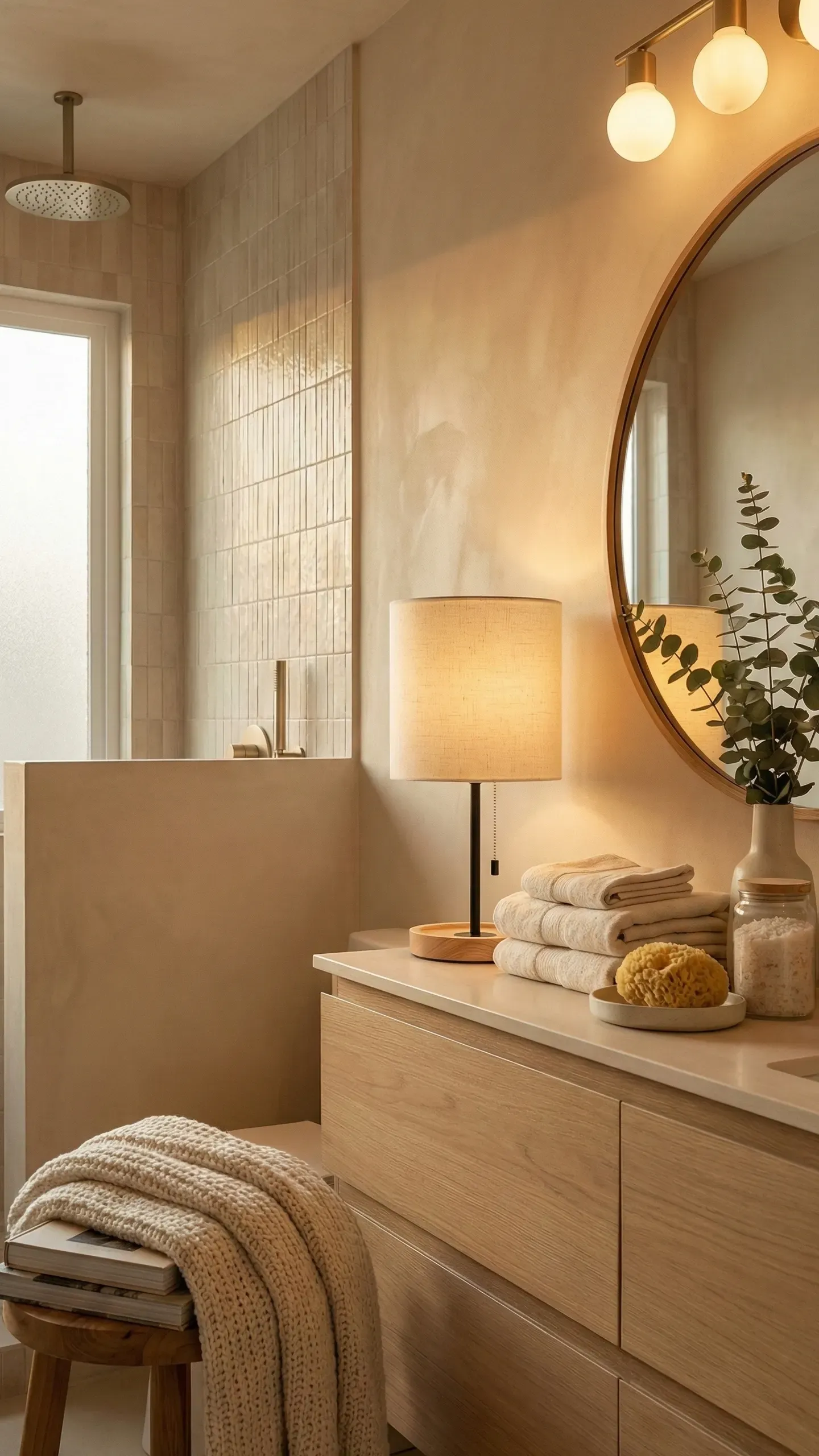
The bathroom is the room most universally lit wrong.
One overhead light. Bright white. Possibly fluorescent. Designed to illuminate the room for functional tasks — shaving, applying makeup — and completely wrong for any other use.
The result: a room that feels clinical at best and unflattering at worst. A room you want to be in as briefly as possible.
Warm lighting changes this entirely. A wall light on either side of the mirror (warm white, not cool) gives flattering light for getting ready. A small lamp on a shelf or counter gives the room an evening setting that’s softer and more restful. Under-shelf LED strips in 2700K.
The bathroom is also worth lighting seasonally. In winter, when evenings are long and dark, the bathroom with a candle lit and a warm lamp glowing is genuinely a good place to be. Most bathrooms never get the chance to be that.
The move: Add one warm light source to your bathroom that isn’t the ceiling light. A small rechargeable lamp works if there’s no outlet in the right place.
The art question
Most bathrooms have no art. A few have art that got put there because it didn’t work anywhere else.
A small piece of art in the bathroom — properly chosen and positioned — is one of the details that tells guests (and you) that the room has been thought about. Not a busy print, not something in contradicting colours, not something too precious for a steamy room.
A simple line drawing in the room’s palette. A small abstract in warm neutrals. Something framed lightly — thin wood or simple black — given enough wall space to breathe.
The steam question: keep art away from direct shower splash and choose prints over originals. A sealed frame helps.
The move: Find one print that works with your bathroom’s palette. Frame it simply. Hang it on a wall you look at from the sink or the bath. See if the room feels more like a room.
Rolling instead of folding
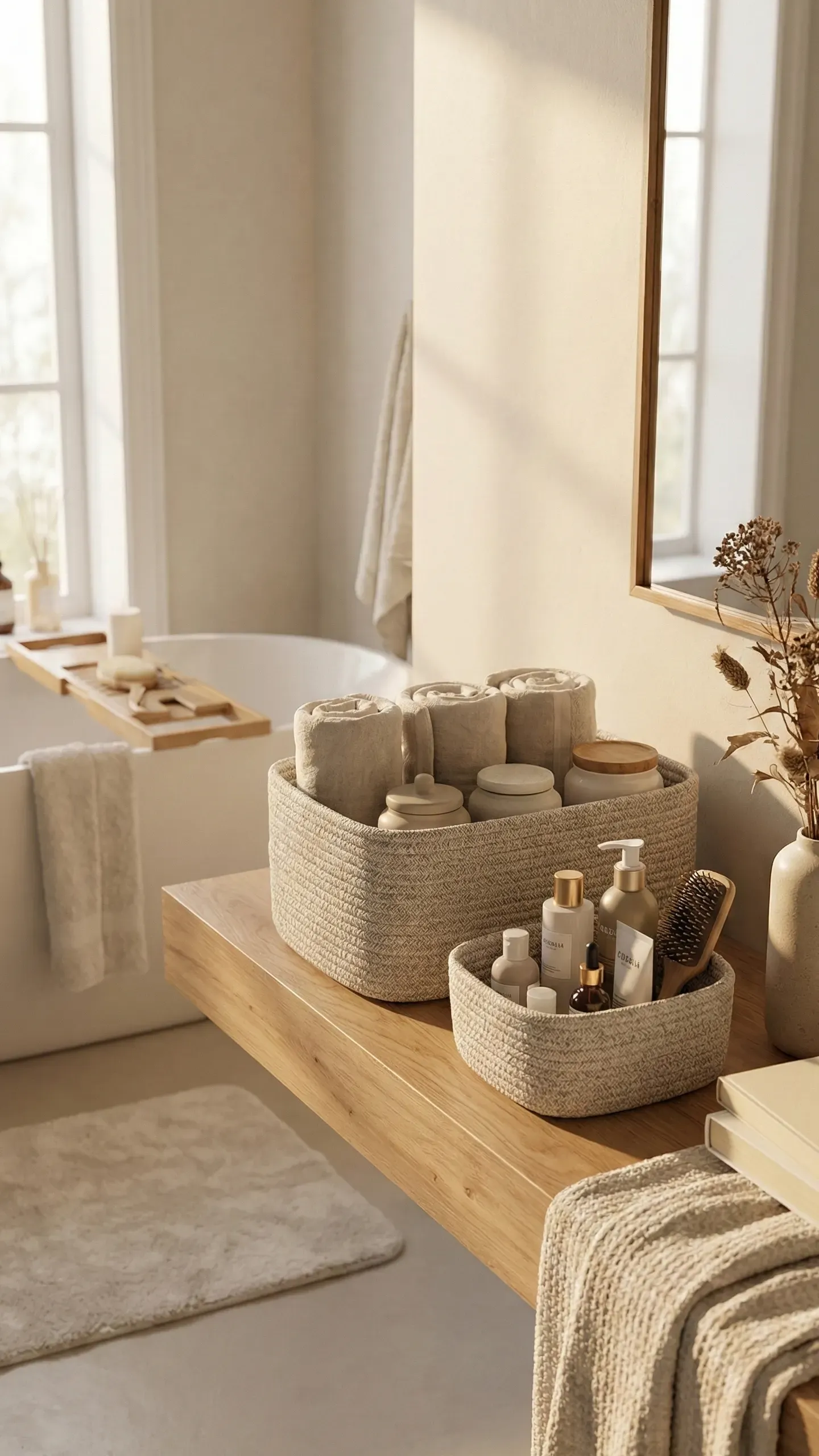
This is the smallest item on the list, and one of the most satisfying to implement.
Roll your towels instead of folding them.
Rolled towels on a shelf or in a basket read as spa. Folded towels read as linen cupboard. It’s the same towels, the same shelf, a completely different feeling.
The display version: a row of rolled towels on an open shelf, smallest to largest, in colour-consistent tones. The utilitarian version: a woven basket on the floor with rolled towels inside. Both are significantly better than folded towels on a rail.
The move: Roll every towel in your bathroom right now. Put them on the existing shelf or in a basket. Notice whether the room feels different.
Plants that survive
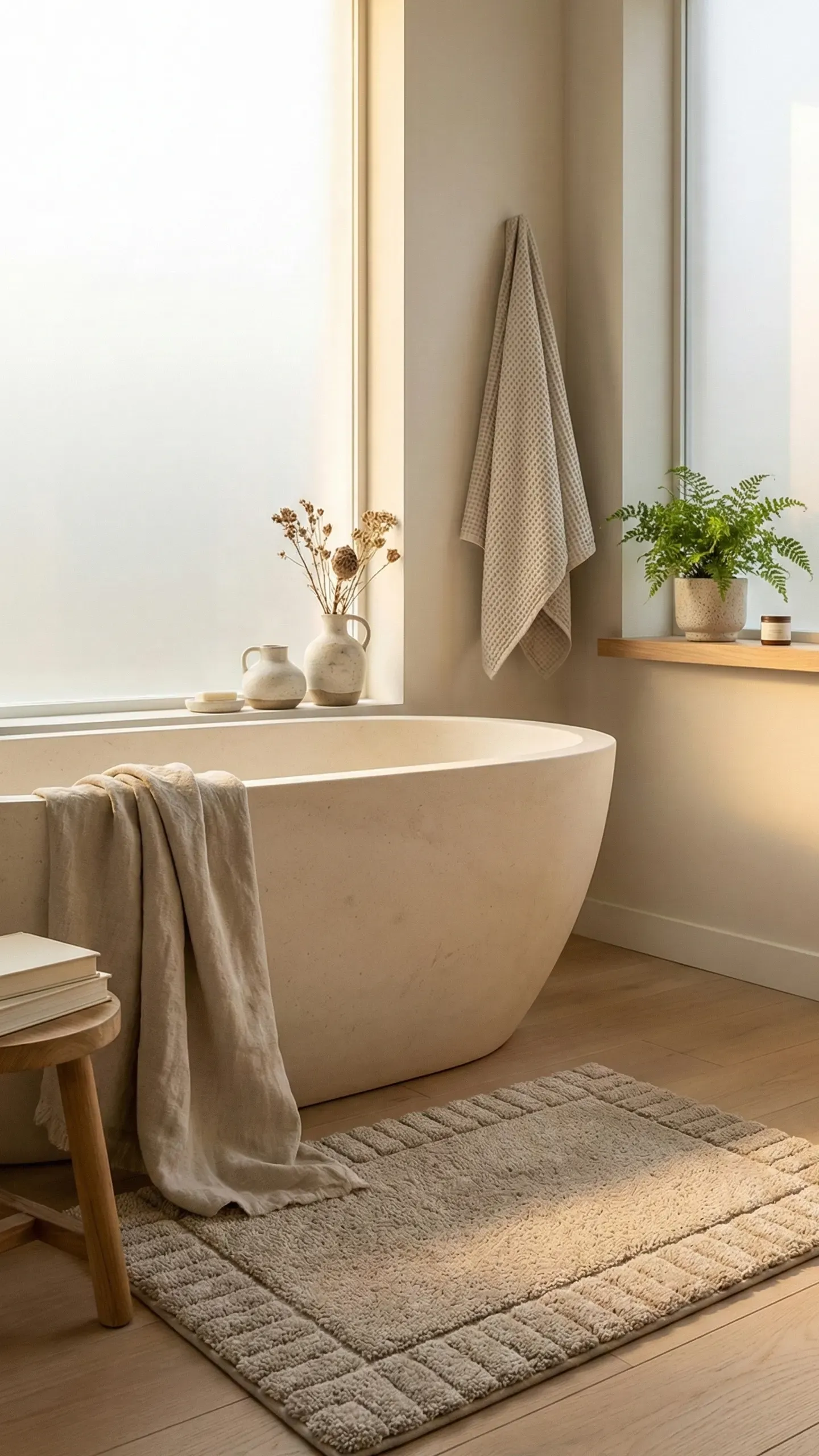
Green in a bathroom is transformative. One plant softens all the hard surfaces and adds the organic quality that tile and porcelain completely lack.
The challenge is the light — most bathrooms have limited natural light, which kills most houseplants reliably. The solution is choosing plants that evolved in low-light, high-humidity environments: pothos, which grows under almost any conditions; ferns, which genuinely thrive in bathroom steam; snake plants, which are nearly indestructible; peace lilies, which prefer shade.
The pot matters as much as the plant. A generic plastic nursery pot undoes the effect completely. A ceramic pot in the room’s palette — cream, sand, warm grey — lets the green be the accent.
The move: Buy one pothos or fern. Repot it immediately into a ceramic pot. Place it where you can see it from the sink.
The tray principle
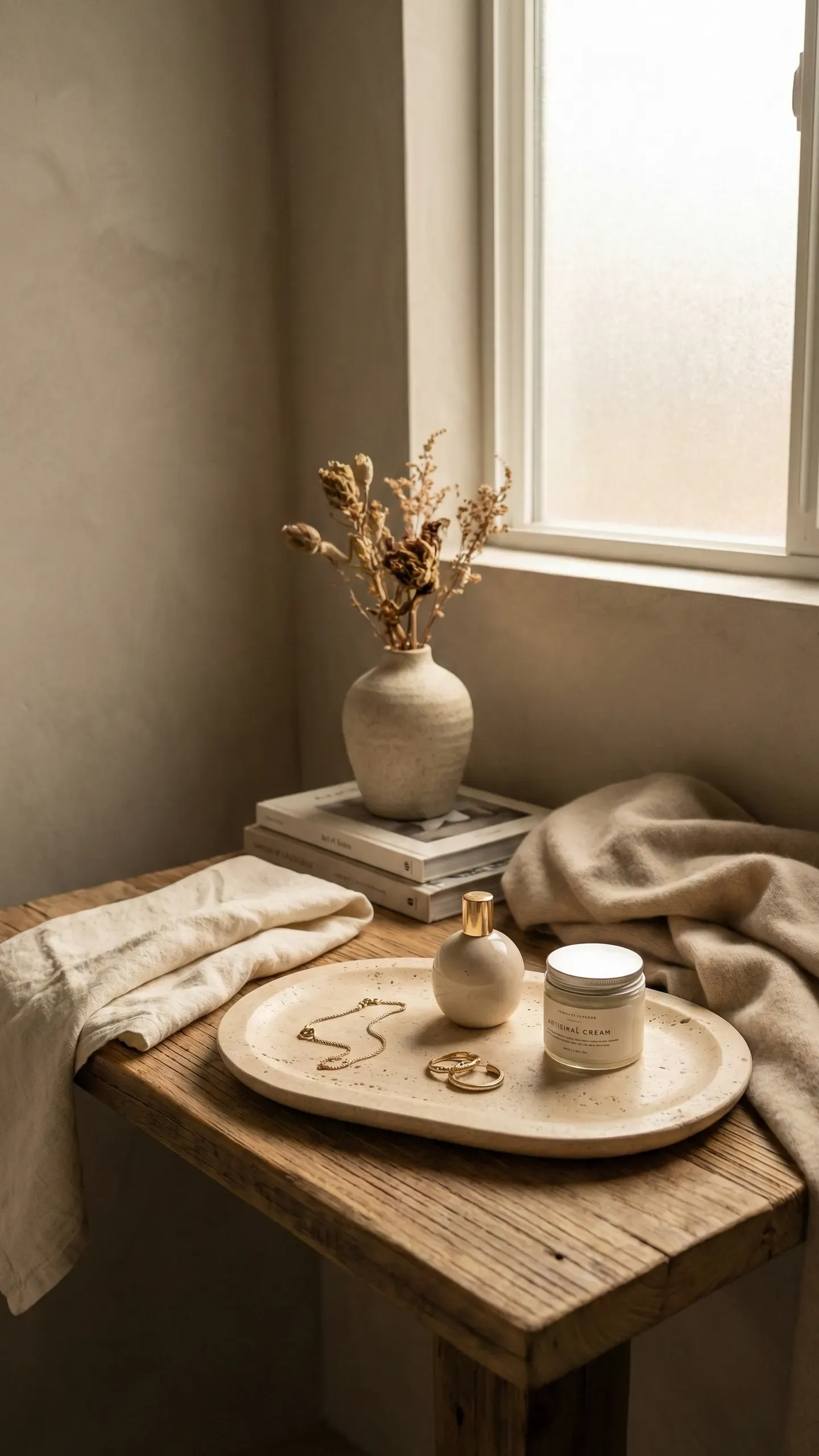
Every bathroom surface benefits from a tray.
The tray does something very specific: it converts a collection of objects from “things on a counter” to “a vignette.” The same candle, the same hand lotion, the same small plant — on a tray, they read as intentional. Without the tray, they read as miscellaneous.
Stone trays are excellent (cool, heavy, elegant). Wood works. Ceramic. The material should be one you’d be happy to have someone else’s hands on, because they will be.
One tray per surface. Not several. The tray defines a zone, and one zone per surface is the discipline that keeps it from becoming clutter again.
The move: Find a tray that works with your bathroom’s colours. Put it on your counter or shelf. Move everything that was there into a drawer, then put back only what fits on the tray and belongs together.
The free Scandinavian Styling Checklist — room by room, change by change.
The bathroom is one room in the free Scandinavian Styling Checklist — a room-by-room breakdown of the same approach applied to every room in your home. What to remove, what to keep, what’s worth investing in. Download it free.


